SolidPath AICase study
New Road Brinery
A pickle maker's WordPress shop, rebuilt from the ground up with AI, custom artwork and all. It is live at newroadbrinery.com, and every page Google knew still works. If your own site feels too fragile to touch, this page shows what a rebuild looks like now.

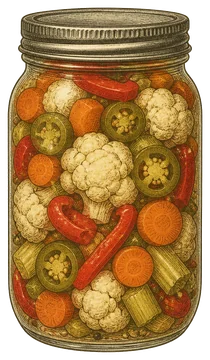
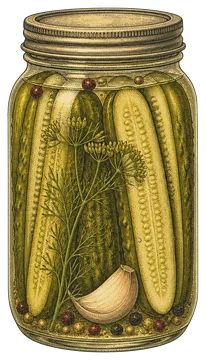
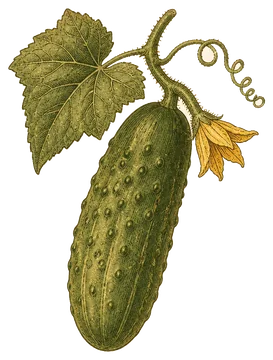
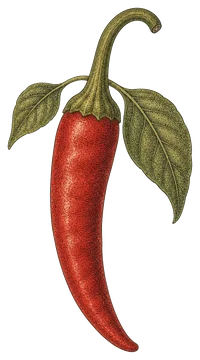
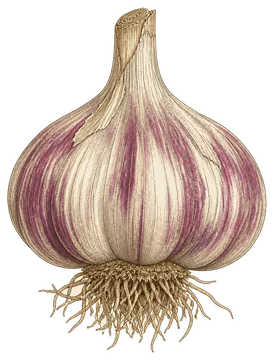
Drawn with AIBuilt with Claude Code
No. 1
The business
Patrick and Kay Gigliotti make small batch pickles and artisan salts in Havertown, PA, and sell them at Philadelphia area farmers markets. Three of their jars have won Good Food Awards, one in 2019 and two in 2021.
Their old site was a WordPress and WooCommerce store. It took orders, but every price lived inside WordPress.
Patrick is a world class cook and pickle maker, and technology is not his thing. So the new site had to be simple for him to run. Orders come straight to his email, with no admin screen to log into and no password to remember.
Most of what I build for businesses is simple & boring, on purpose. Boring means reliable, and reliable means you forget it's there. Here, the customer experience is anything but boring. So think of it as a jar with two labels. The front is the look Patrick's customers see. The back is everything that runs the shop.
The front label
Anything but boring
- Hand colored engravings
- A sunrise animation over a cucumber field
- An 1880s scrapbook for the family story
- Myron the pig and the farmer
The back label
Simple & boring, on purpose
Serving size1 order
Plugins to patch0
Servers to keep alive0
Card numbers kept on the site0
Logins for Patrick0
Passwords to remember0
Ingredients: plain pages, Stripe Checkout, one order email, fully managed, nothing to maintain.
The goal: a site that feels like the brand, and a shop Patrick runs from his inbox.
No. 2
A site that feels like the brand
The design started from one rule: the site should feel like the brand a customer already knows. Cream label paper, dark brown ink, olive buttons and the wordmark's own engraved capitals, set beside the weathered wood in every product photo. The art direction goes back to 1880s seed catalogs and crate labels.
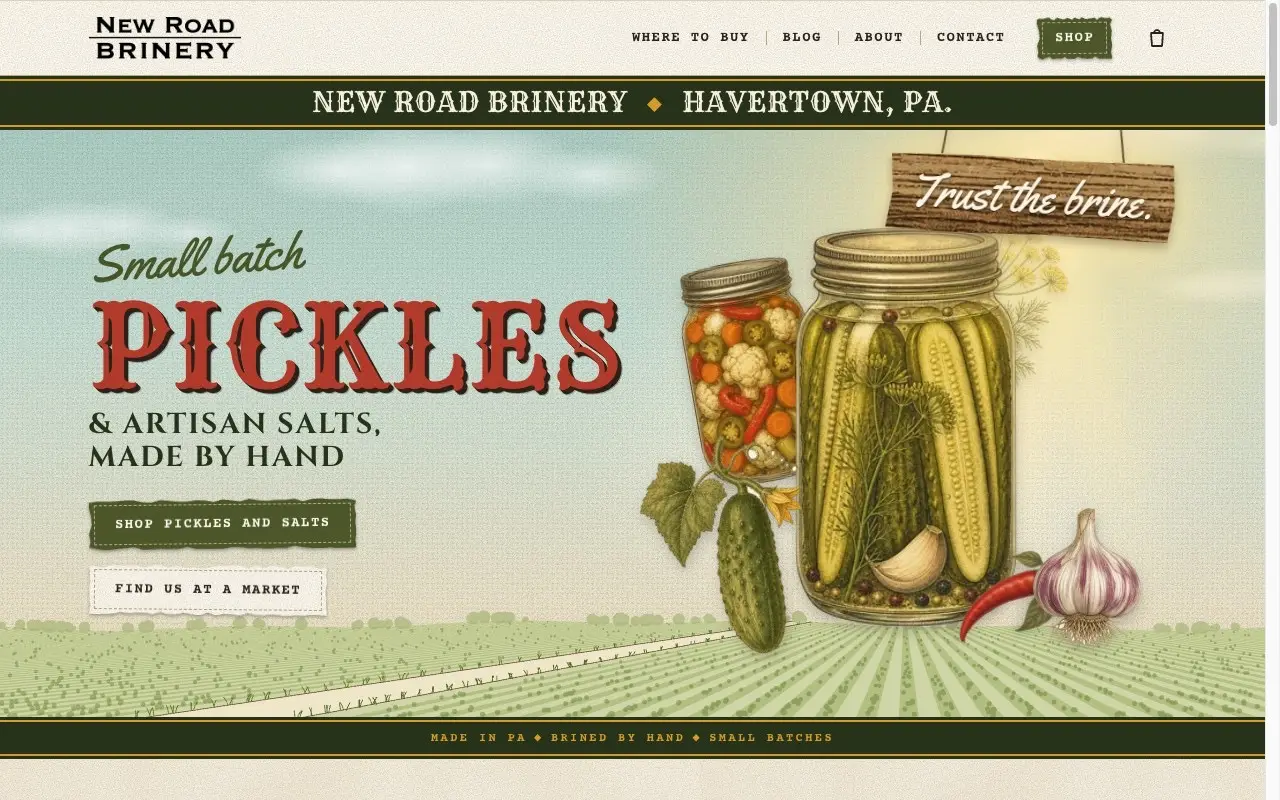
Every drawing on the site was made for it with AI image models. To pick a style, I ran the same prompts through OpenAI's GPT Image 2 and Google's Gemini 3 Pro Image in four looks: ink and watercolor, linocut, seed packet and colored pencil. The seed packet engraving won. From there it took 25 design rounds, each one a set of options side by side, with only the picks making it onto the site.
This page is drawn from the same box of art: the jars, the papers, the photo corners and the road at the bottom.
- Home. The sun rises in an arch over a cucumber field and lights the jars, while the New Road runs up through the rows.
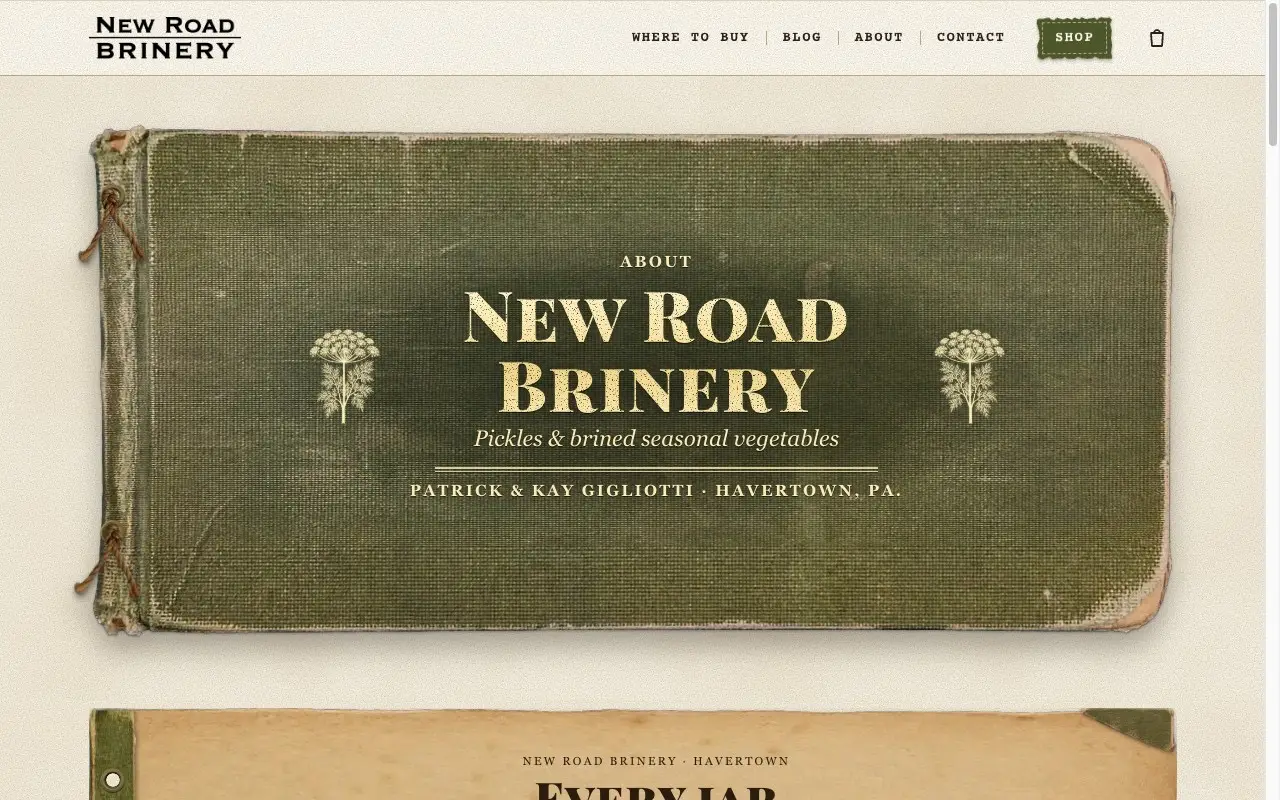
- About. An 1880s laced scrapbook: a worn cloth cover with the billhead in gold foil, photos in black corners, a press cutting on newsprint, and postcards carrying real public domain 1880s stamps.
- Blog. A cork board in a barn wood frame with a plank sign nailed across the top. Each post opens as a ruled index card with a Recipes, Press or Pairings tab.
- Off season. After the last market day, the shop hangs an old shop door card: "Sorry, we're closed for the season." It opens again on its own when next year's dates go in.
The link feels like the brand too
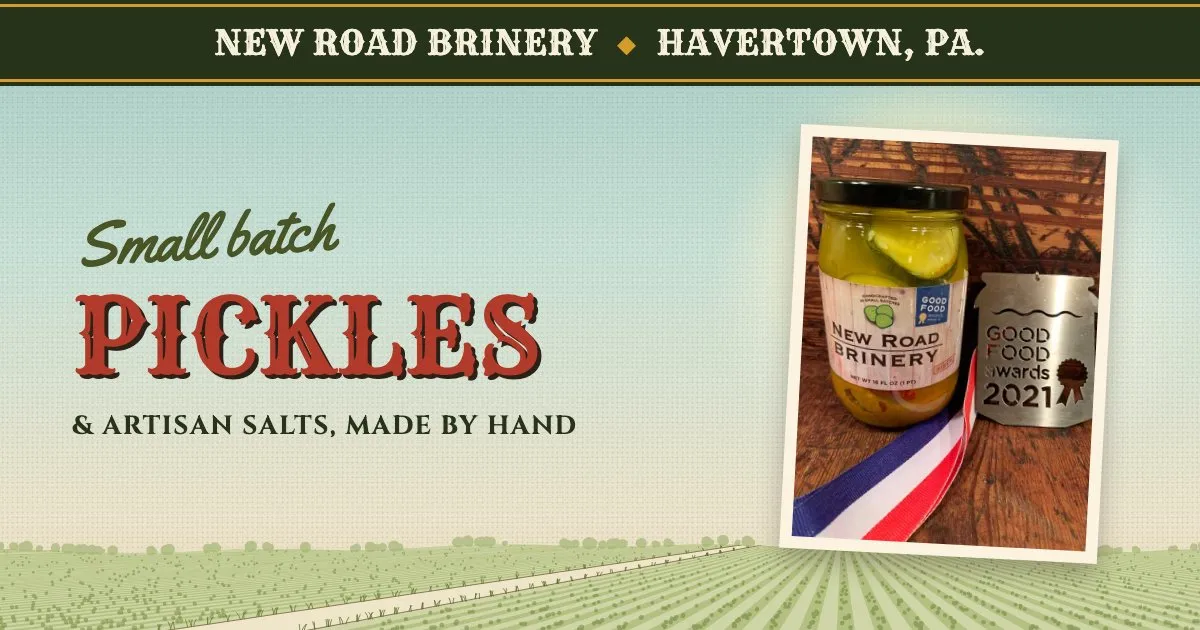
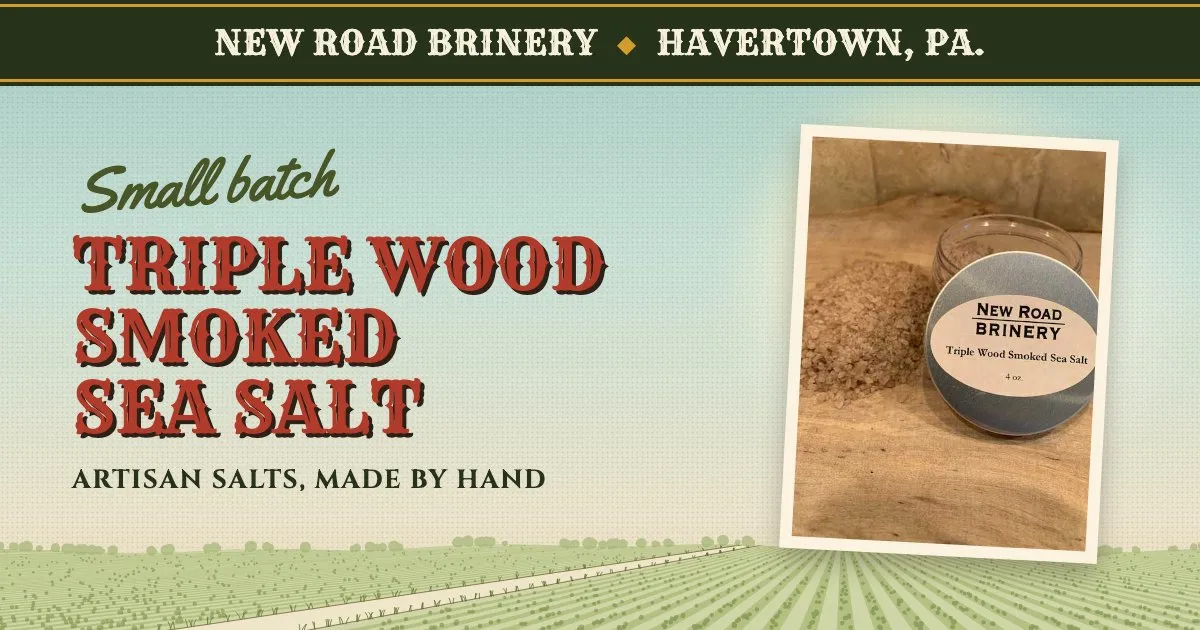
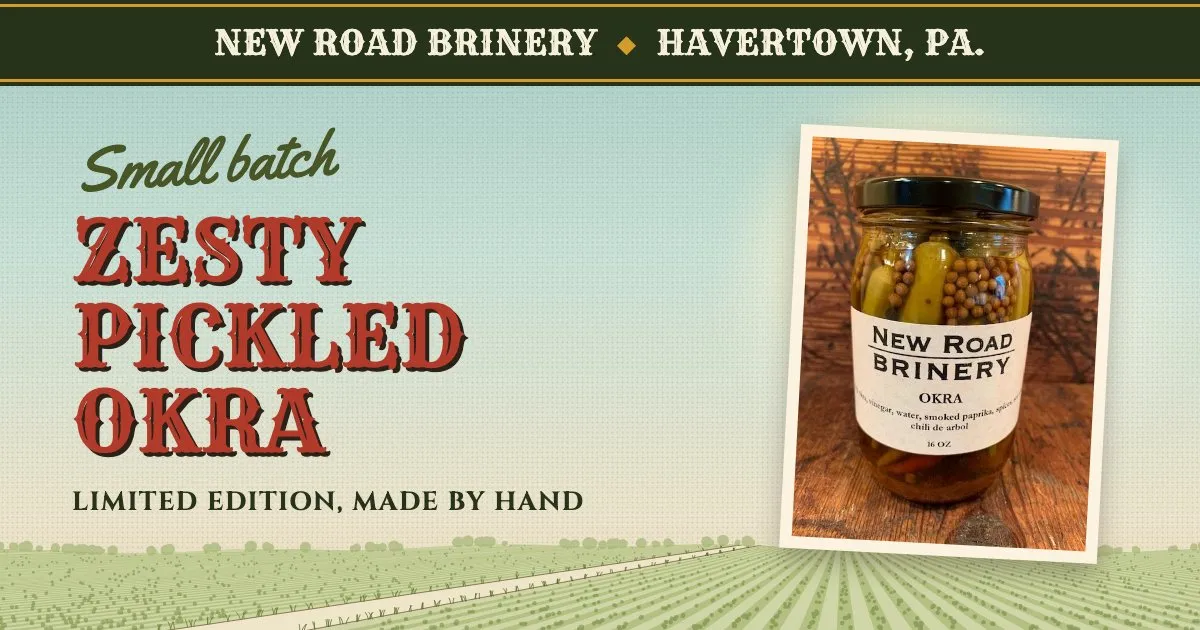
Paste a link to any page of the site into a text, an email or a Facebook post, and the preview that comes up is drawn in the same look: the Havertown band, the sky over the cucumber field, the name in red and the real jar.
Each of the 17 products has its own card. Every other page, the blog included, shares the home card with the 2021 award jar. A tall jar photo on its own gets cropped to a strip through the middle on Facebook, LinkedIn and X, so these are drawn wide to show the whole jar. There are no prices on them, because the networks keep a card for weeks and Patrick's prices change in Stripe.
You have to try these newroadbrinery.com/shop/zesty-habanero-pickles
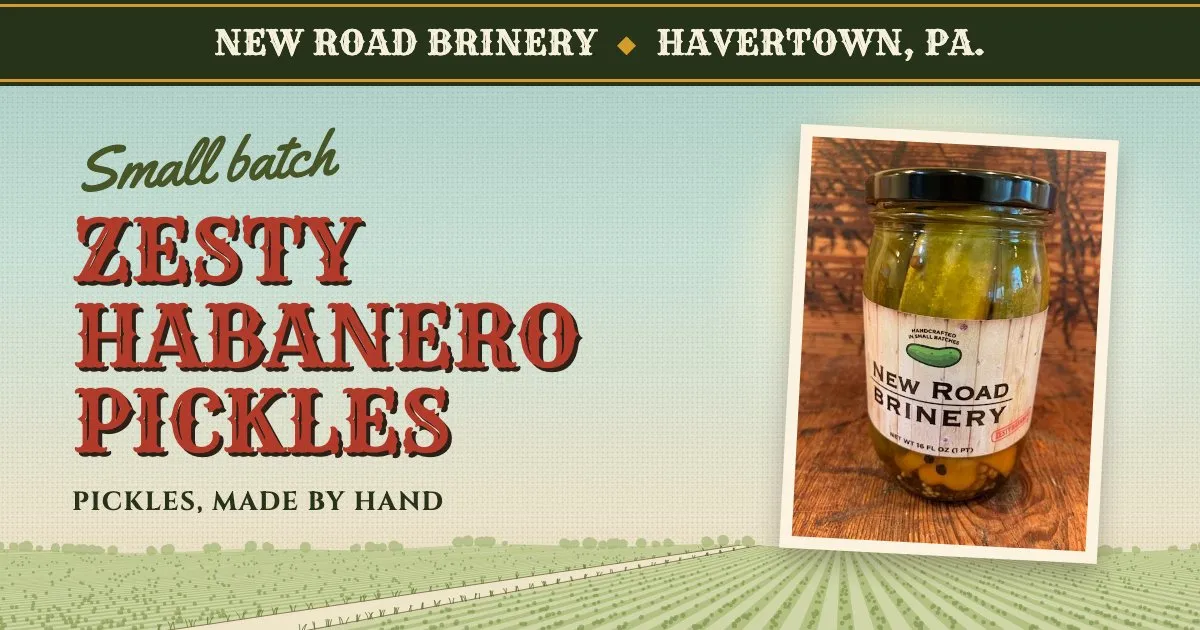 Zesty Habanero Pickles | New Road Brinery
newroadbrinery.com
No. 3
Two Easter eggs
Look for these on the live site.
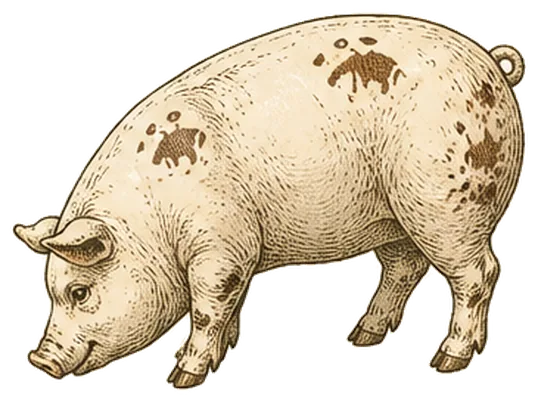
Myron the pig
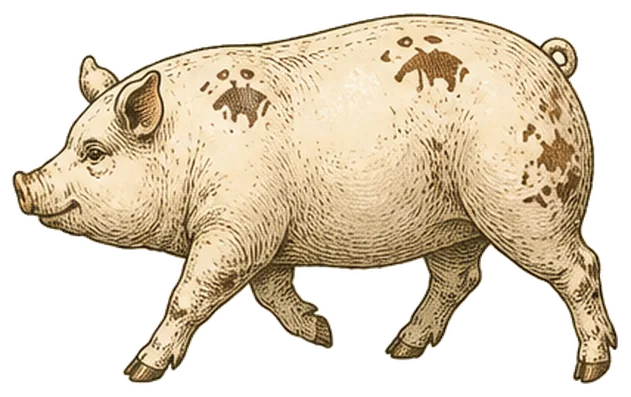
Myron is real. He is on the About page with Patrick and Kay. His engraved twin trots the dirt road at the bottom of every page: once the road scrolls into view, he comes in from the right, trots off the left edge, waits 20 seconds, then comes back the other way. He turns up again on the About page, on the press clipping, looking up at Patrick.
The farmer
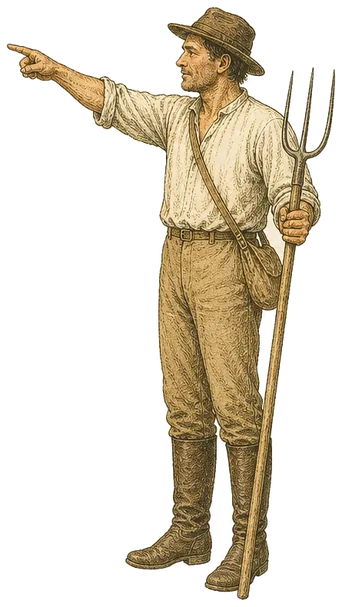
An 1880s Pennsylvania farmer with a pitchfork, dressed from a living history farm photo. He lives on the Contact page. Miss a field and he points at it, then moves on as each one gets fixed. Send the message and a RECEIVED stamp comes down while he waves his hat.
How they were made. Each one started as an AI pose sheet, cut into four poses at one scale. The farmer points, waves, bows and walks. Myron stands, trots, sits and sniffs, drawn from his real photo in the farmer's style. The farmer walked the footer road first, until Myron took the job. Both of them are on this page too.
No. 4
A shop the owner runs from his inbox
The look gets attention. The shop behind it is what saves Patrick time every week.
- Prices live in Stripe. Change a price there and the site shows it. No web person, no update.
- Pickup at the market. Customers pick the Oakmont or Swarthmore farmers market and the day they come by. Patrick's order email names both.
- One button per order. Patrick never signs in to anything. His order email has a Mark as picked up button that opens the order with one confirm, and an Undo if he taps it by mistake.
- Sold out or unavailable. A jar marked unavailable stays on the shelf with a note, like "Back in June, when the garden habaneros come in." The cart and checkout stop selling it.
- He owns all of it. The site runs on New Road Brinery's own Cloudflare account and the money goes to its own Stripe account. SolidPath AI manages all of it for him.
No. 5
Moving without losing anything
The risk in replacing a working shop is everything you cannot see: Google's saved links, the payment connection, the email that tells the owner an order came in. So the move was planned around those.
33 old addresses work exactly as before. 11 more forward to their new page with a permanent redirect, and the old WordPress sitemap addresses point Google at the new one. Product descriptions stayed in Patrick's own words.
On launch day, every page in the sitemap answered, 35 of 35. A live pickup order went through end to end: both emails, the thank you page, Mark as picked up, and two partial refunds. The old WooCommerce payment key was rolled so the old server can no longer touch the money, and a written rollback plan sat ready in case anything went wrong.
The live test passed on the first day.
No. 6
How it was built
One person built this with AI. My own site building system, running on Claude Code, turned a written brief into a complete first draft, with 35 pages and all 17 products. The cart and Stripe checkout came next. After that came the craft: design rounds, real artwork, a hardened checkout, and testing on phones and laptops until it held up.
There is no WordPress left to update. The pages are plain files on Cloudflare's network, so there are no plugins to patch and no server to keep alive.
- Cloudflare Pagesplain pages on a global network, on the brinery's own account
- Stripe Checkoutpayments, live prices and refunds
- Cloudflare D1the order book and the contact form log
- Clerkauthentication, used only by SolidPath AI
- Cloudflare Turnstilestops spam with no checkbox to click
- MXRouteorder and contact emails from the brinery's own subdomain address
- GPT Image 2, Gemini 3 Pro Imagethe engravings, papers and props
- Claude Codethe build, the tests and the move
All that art still loads fast on a phone. Here is how Google scores the home page on mobile.
PageSpeed Insights, mobile, home page.
isitagentready.com
No. 7
Questions
Your tagline says simple & boring. Is this site boring?
Under the hood, yes. It runs on plain pages with no plugins to patch, and every order lands in Patrick's inbox. That is the simple & boring part, on purpose, because boring means reliable. The look has a different job. A customer who has held one of Patrick's jars should recognize his site, and his jars are anything but boring. So this one is simple to run and anything but boring to look at.
Did the old site's Google links survive the move?
Yes. 33 old addresses work exactly as before and 11 forward to their new page with a permanent redirect. The old WordPress sitemap addresses forward to the new sitemap. The one address left out was the blog's comments feed.
Is the artwork made with AI?
Yes. Every drawing was made for this site with AI image models and picked by hand, round by round. The stamps on the About page postcards are the exception: real public domain 1880s US stamps.
Who owns the site?
The business does. The site runs on New Road Brinery's own Cloudflare account and the payments go to its own Stripe account. SolidPath AI manages all of it for them, but they keep ownership and can end that at any time. No long term contracts, only clients who choose to stay.
Could SolidPath AI build something like this for my business?
Yes. SolidPath AI builds custom web apps and AI systems for professionals and small businesses. Each one is kept simple on purpose. You can run it yourself instead of calling for help, or hand all of it to SolidPath AI to manage, as my clients do, so the tech is completely hands off.
Thanks for readingTrust the brine
Need something built?
You get simple & boring AI systems, on purpose. They just work, so you forget the tech is there and stop needing to call.